

GR®700: the Régordane Way
 GR (long-distance hiking path)
The Régordane Waywas absolutely central to circulation in Antiquity and the Middle Ages. As you hike it, you can explore the movement of people, merchandise and ideas at each stage. The Régordane Way still bears the traces of the fight for freedom of conscience and the successive challenges that it brought to the Catholic Church: Arianism, Catharism and Protestantism. It runs through very diverselandscapes, beginning with coniferous forests and lava flows in the norththat are gradually replaced by sweet-chestnut trees, broom and holm oak, and then by garrigue(Mediterranean scrubland)as you approach the Petite Camargue.
9 points of interest

 Tradition
The fairs at Villefort
Since 1511, Villefort market has been held on Thursday mornings. In the early 19th century, there were up to 14 fairs a year. Children had to attend mass at Saint-Loup-et-Saint-Roch Chapel to be allowed to go to the fairs. Large crowds were attracted to the fairs by their good reputation. The fair held on 14 September was one of the most impressive, with countless cattle blocking the village's squares and lanes. Today, Villefort is a lively place with bric-a-brac shops and artisan fairs.
 History
The origins of Villefort
In the Middle Ages, Villefort was known as Villa Montisfortis, a name that might stem from a former Roman agricultural estate. At the time, a castle overlooked the village, of which nothing remains today. This castrum was strategically located on the heights of Le Collet (at the southern exit of Villefort) to protect the Regordane Way – and to collect tolls.
- History
The Regordane Way
The Regordane Way linking Alès (Gard) and Luc (Lozère) is a section of the important route that connected Lower Languedoc and the Auvergne in the Middle Ages. It facilitated trade between the Mediterranean basin and parts of the Kingdom of France. The mule-drivers that used it – known locally as Régordans or Rigourdiers – transported oil, wine and salt. It was also a religious path, taking pilgrims called Romieux to Saint Gilles It was progressively abandoned in the 14th century, when the port at Marseille and the fairs in Lyon grew in importance. Ruts left by cartwheels can still be seen north of Prévenchères (between Le Thort and La Molette) and near Saint-André-Capcèze.
 Architecture
Stone architecture
The architecture of Villefort's old buildings is typical for one-street villages:
• the houses with the two vaulted porches were once inns, tradesmen's or artisans' shops: one of the porches was used to store merchandise, the other to display it;
• the sculpted lintels above the entrances to some houses on Rue de l'Eglise and Rue de la Bourgade bear witness to the activities of former occupants;
• several facades have handsome mullioned windows from the Renaissance.- Architecture
Rue de l’Église
The town hall is a former private mansion of the 15th century, with a spiral staircase and ground-floor rooms with vaulted ceilings. The lintel behind the gate comes from a fortified house in the village of Bayard, which is now under the waters of the Lake. On the facade of the 16th century house opposite is a finely crafted mullion window.
• The oldest house in the village is a listed monument and dates from the 14th century. It has Gothic windows and a pulley system once used to bring forage into the loft.
• An archway giving onto an internal courtyard shows you mediaeval walls made from large regular blocks.
• Two lintels bear Christ's monogramme: IHS, Iesus Hominum Salvator (Jesus saviour of mankind). One instance is followed by the inscription Ave Maria. - Agriculture
The sweet chestnut
In 1900, sweet chestnuts were the main farm produce. The nuts of this so-called “bread tree” fed many families as well as their farm animals. Chestnut-growing is a year-round activity, but is especially busy at harvest time. Harvesters would meet in the evening for a brousillade (chestnuts roasted on a wood fire). When parts of the rural population left, many chestnut orchards were abandoned while others were cut down for their tannin to be extracted. Chestnut bleeding canker and chestnut blight, diseases caused by mushrooms, also killed off a great number of trees. Today, chestnut farming in the Cévennes is being revived with a focus on quality.
 Archaeology
Place de l'Ormeau
Villefort's former market square, Place de l'Ormeau hosted Clédou market on Thursday mornings until the 1980s. The square teemed with smells and colours. Livestock, meat, vegetables, grains and chestnuts were sold here, especially in the 19th century. The lime tree on the square was planted on 11 November 1920 as a “victory tree” so that future generations might remember their ancestors' fight for freedom during the First World War. The Maison Chambon, with its double-archway entrance, has an inscribed lintel: Metre Iehan Martin 1595, flanked by a diamond shape and a heart.
- History
The Régordane Way
The Régordane Way, a transport and pilgrims’ route as early as the 12th century, linked Le Puy-en-Velay with Saint-Gilles. It runs alongside many villages with characteristic architecture (Romanesque churches, the arrangement of the houses, the door and window frames, etc.).
Note the Reboulet cross on the façade of the last-but-one house on the left before the second fountain.
- History
Pont de Rastel
Pont de Rastel, like Chamborigaud, La Vernarède and Chambon, experienced substantial economic growth during the Golden Age for spinning-mills and coal mines, in the 19th and early 20th centuries. This is the former Le Gravas magnanerie (silkworm farm) to which the writer Jean-Pierre Chabrol, born in Chamborigaud, often referred in his works. It has been the family’s home since the 14th century.
Description
This document presents only the segment of the trail between la Bastide-Puylaurent et l’Affenadou, most of which is on the territory of the Cévennes National Park. You can find the entire itinerary in the official guidebook, Le chemin de Régordane (ref. 7000),published by the Fédération française de randonnée pédestre (FFRandonnée)and sold in the National Park’s centres, online at www.cevennes-parcnational.fr, in bookshops and sports shops, and at boutique.ffrandonnee.fr. All information about the Régordane Way is also available at www.chemin-regordane.fr.
- Departure : La Bastide-Puylaurent
- Arrival : L’Affenadou
- Towns crossed : Langogne, Luc, Laveyrune, Saint-Laurent-les-Bains-Laval-d'Aurelle, La Bastide-Puylaurent, Prévenchères, Pourcharesses, Villefort, Saint-André-Capcèze, Ponteils-et-Brésis, Concoules, Génolhac, Chamborigaud, La Vernarède, Portes, and Laval-Pradel
Forecast
Altimetric profile
Recommandations
N.B.: For a variety of reasons, the actual way-marks can differ from the route described in the guidebook. Please follow the way-marks. Make sure your equipment is appropriate for several days of hiking, but also for the day's weather conditions. Remember that the weather changes quickly in the mountains. Take enough water, wear hiking shoes and put on a hat. Close all gates and barriers after yourself.
Information desks
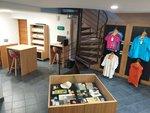
Tourism'house and national parc, Génolhac
Place du Colombier, 30450 Génolhac
This office is part of the National Park's associated tourist-information network, whose mission is to provide information on, and raise awareness of, the sites and events as well as the rules that must be observed in the National Park's central zone.
Open from april to october

Tourism office Mont-Lozère, Villefort
43, Place du Bosquet, 48800 Villefort
This office is part of the National Park's associated tourist-information network, whose mission is to provide information on, and raise awareness of, the sites and events as well as the rules that must be observed in the National Park's central zone.
Open year-round
Transport
Train line Clermont-Ferrand - Nîmes
Calculateur d'itinéraire Lio
Utilisez le calculateur liO pour organiser votre trajet en région Occitanie.
Autres régions
Calculez votre itinéraire en Auvergne Rhône Alpes sur Oùra
Biodiversité autour de l'itinéraire
Source



Report a problem or an error
If you have found an error on this page or if you have noticed any problems during your hike, please report them to us here: